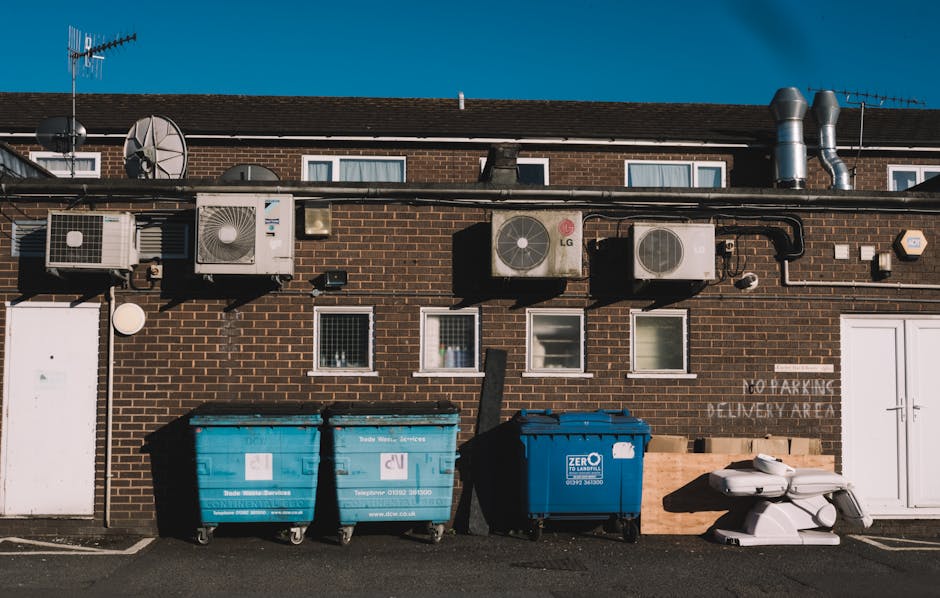
Lambeth Council bulky waste rules and removal service options
Posted on 06/07/2026
If you've ever stared at an old sofa, a broken wardrobe, or a pile of awkward junk and thought, "Right... what now?", you're not alone. Lambeth Council bulky waste rules and removal service options can feel simple at first, then suddenly turn into a maze of collection limits, booking steps, access issues, and the question everyone asks: should I book a council collection or hire a private removal team?
This guide cuts through the noise. It explains how bulky waste usually works in Lambeth, what typically counts as bulky waste, the practical do's and don'ts, and when a private service makes more sense than waiting for a council slot. You'll also find a comparison table, a step-by-step approach, a checklist, and a few grounded tips from the sort of real-life moving situations people run into in Lambeth flats, terraces, and office spaces.
To keep things practical, we'll also touch on related moving support where it genuinely helps, such as furniture removals in Lambeth, man and van help, and broader recycling and sustainability considerations.

Why Lambeth Council bulky waste rules and removal service options Matters
Bulky waste is one of those things that seems minor until it's sitting in your hallway, blocking the meter cupboard, or making a flat feel half the size. In Lambeth, the rules matter because bulky items can't just be left out on the pavement and forgotten about. That creates safety issues, mess, possible complaints from neighbours, and, to be fair, the sort of hassle nobody needs on a Sunday morning.
For residents, the main challenge is usually not the item itself. It's the timing, the access, and the uncertainty. Can the council collect it? Does it need booking? Is it accepted? Can it be carried down narrow stairs without a scratch on the wall? If you live in a top-floor flat, a converted house, or a block with limited lift access, the difference between a simple collection and a stressful one can be huge.
There's also a financial angle. A council service may be the most economical route for straightforward items and non-urgent clearances. But when you need speed, lift-heavy lifting, multiple items, or support with sorting and recycling, a private removal option can actually save time and reduce the risk of damage. Not every "cheap" option stays cheap once you factor in your own time, missed work, parking problems, or a last-minute second booking. Funny how that happens.
And then there's moving day. Bulky waste often crops up during house moves, refurbishments, tenancy turnovers, student clear-outs, and office changes. If you're already dealing with deadlines, keys, access windows, and parking restrictions, the right disposal route can make the whole process feel a lot more manageable. For more context on moving locally, it can help to look at flat removals in Lambeth or house removals in Lambeth when the bulky items are part of a bigger move.
How Lambeth Council bulky waste rules and removal service options Works
At a practical level, bulky waste rules are about three things: what the council will take, how you arrange it, and how you present the items for collection. That sounds basic, but most problems happen in those three areas.
Bulky items are usually large household objects that are too big for normal bin collections. Think furniture, mattresses, some electricals, and other awkward household goods. Exact acceptance rules can change, so it's always wise to check the council's current guidance before booking. In general, the council wants items separated sensibly, accessible for collection, and left in the agreed place and time window. Don't assume a pile by the door is enough if the instructions say otherwise.
The removal service options usually fall into two broad groups:
- Council bulky waste collection - best for residents who can wait for a scheduled collection and only need a relatively simple, rule-based pickup.
- Private removal service - best for faster, more flexible, or more labour-intensive jobs, especially where items are heavy, awkward, or mixed with other clearance needs.
The council route is normally more rigid but straightforward. The private route is more flexible and can be tailored around your property, your access, and your timeline. If you're unsure which one suits your situation, a good rule of thumb is this: if you're dealing with one or two manageable items and can wait, council collection may work well. If you've got a sofa, a bed base, a broken fridge, and a narrow staircase, a removal team may be the safer bet.
In real life, those access details matter. A ground-floor house with a clear front path is one thing. A busy Brixton road at school-run time is another. If timing and access are tricky, a private team that understands local conditions is often worth the extra spend. For especially time-sensitive jobs, some people also compare this with same day removals in Lambeth when the need is urgent.
Key Benefits and Practical Advantages
Choosing the right bulky waste route is about much more than getting rid of old stuff. Done properly, it protects your time, your property, and your sanity. And yes, sanity counts.
1. Better control over timing
With private removal, you can usually choose a collection window that fits around work, school runs, lettings appointments, or move-out deadlines. That matters a lot if you've got a tight handover or a short access slot.
2. Less physical strain
Bulky waste is often, bluntly, awkward. Mattresses twist. Wardrobes catch on door frames. Old desks are heavier than they look. A removal team handles the lifting, which reduces the risk of injury and damage.
3. Cleaner property handovers
If you're leaving a rented flat, a clean empty space helps the final inspection go more smoothly. Same for selling a home. A quick, tidy clearance can make the place feel properly finished rather than half-abandoned.
4. More flexible disposal support
Private services can often take mixed loads, sort items, and handle odd-shaped pieces that are a pain to move alone. That flexibility is especially useful when bulky waste is only one part of a bigger clearance. If you're clearing out a whole room, a broader removal services in Lambeth approach may fit better.
5. Better recycling outcomes when handled properly
Many bulky items can be diverted from landfill if they are sorted well. Even when an item is no longer usable, components may be recyclable. That's where a thoughtful provider and the right local process make a real difference.
Expert summary: If the job is small, non-urgent, and easy to present, the council route is often the simplest. If the job is heavy, urgent, access-heavy, or part of a larger clearance, a private removal option usually pays for itself in saved time and fewer headaches.
Who This Is For and When It Makes Sense
This topic is relevant to a wider group than people first realise. Sure, it applies to households getting rid of old furniture. But it also affects tenants, landlords, student sharers, estate agents, office managers, and anyone preparing for a move or renovation.
It makes sense for:
- tenants clearing a flat before check-out
- homeowners replacing large furniture
- landlords dealing with leftover items after a tenancy
- students moving out at the end of term
- small businesses disposing of desks, filing cabinets, or surplus office furniture
- families doing a room-by-room declutter before a move
Let's say you're moving from a first-floor flat in Stockwell with a narrow stairwell and a corner sofa that no longer has a happy home. You could wait for a council slot, but if the sofa has to come down two awkward turns and you're already juggling packing, parking, and key handover, a private removal team may be the calmer choice. On the other hand, if you've got one old armchair and a broken bedside table, the council route may be perfectly adequate.
Some readers also discover that bulky waste decisions overlap with other moving questions, such as where to store items temporarily or how to pack what is being kept. That's where storage in Lambeth and packing and boxes support can be useful alongside disposal planning.
Step-by-Step Guidance
If you want to avoid last-minute stress, a simple process works best. Here's a practical way to approach bulky waste in Lambeth.
- List every item
Write down exactly what needs to go. Include size, condition, and whether it can be dismantled. A quick inventory saves confusion later. - Separate what can be reused or recycled
Some items are still usable. Others may be recyclable. Sort them before booking so you don't pay for the wrong kind of removal. - Check whether the item is suitable for council collection
Look at the council's current bulky waste guidance and collection conditions. Pay special attention to item categories, limits, access rules, and collection instructions. - Decide whether speed matters
If you need the item gone before a tenancy ends, before builders arrive, or before a sale completion, a private service may be the better fit. - Measure access points
Doorways, stair widths, lift size, and parking access all matter. If a wardrobe barely made it in, it may not come out gracefully. That's just life, sadly. - Choose the right service type
Match the job to the route: council for simple scheduled collection, private removal for speed and handling support. - Prepare the items properly
Empty drawers, remove loose parts, tape up sharp edges, and dismantle furniture where practical. This can make the collection safer and quicker. - Keep the collection area clear
Make sure the items are placed exactly where collection instructions require. Poor positioning can lead to missed pickups. - Confirm parking and access if needed
If a vehicle needs to stop outside your property, make sure the access plan is sorted. For moving-related stops and vehicle access, this nearby guide on parking permits for house removals in Lambeth can be a helpful read. - Ask for confirmation and keep records
Save the booking details, collection time, and any instructions. It helps if something changes or there's a query on the day.
Expert Tips for Better Results
A few small choices make the whole process easier. Not dramatic, just sensible.
Tip 1: Book earlier than you think you need to. Even if you're not sure about the final date, getting the process moving early reduces panic later. Council services can fill up, and private teams get busier around weekends and month-end.
Tip 2: Don't underestimate awkward items. A mattress sounds simple until you're wrestling it through a tight landing. A dining table sounds easy until the legs won't budge. Truth be told, furniture is excellent at pretending to be manageable.
Tip 3: Combine jobs where possible. If you're clearing bulky waste as part of a move, it may be more efficient to combine it with your main removals booking rather than doing separate jobs. For example, a team handling house removals may also be able to help with bulky items that would otherwise be awkward to shift later.
Tip 4: Be realistic about DIY. If an item is heavy or damaged, DIY disposal can turn into a back injury or a broken banister very quickly. There's no medal for wrestling a wardrobe down the stairs alone.
Tip 5: Keep neighbours in mind. In shared buildings, noise and obstruction matter. Move items during sensible hours, avoid blocking communal areas, and don't leave clutter in hallways overnight if you can help it.
Tip 6: Ask how recycling is handled. A good service should be transparent about where items go and how recyclable materials are handled. That's especially useful for mixed loads with furniture, metal, and electricals.

Common Mistakes to Avoid
Most bulky waste problems are avoidable. They usually come from rushing, guessing, or assuming the process is looser than it is.
- Leaving items out too early - this can create clutter, attract complaints, or breach collection instructions.
- Booking the wrong service for the job - a council pickup may be too rigid if you need immediate removal.
- Forgetting access constraints - stairs, parking, and shared entrances can make a simple job much harder.
- Not checking what is accepted - mixed waste can lead to refusal or delay.
- Underestimating item weight - if two people struggle to move it, don't assume one person and optimism will do the trick.
- Ignoring tenancy deadlines - many people leave disposal too late and then end up paying more for rush help.
- Failing to separate reusable items - a quick sort can reduce waste and improve value.
One more thing: don't build your plan around the assumption that "someone will sort it out on the day." That's how stress sneaks in. Better to confirm the details now than to discover a collection rule after the van has gone.
Tools, Resources and Recommendations
You don't need fancy kit, just a few practical basics.
- Measuring tape - useful for checking furniture, hallways, lifts, and door clearances.
- Basic tools - a screwdriver or Allen key can help dismantle beds, tables, and flat-pack furniture.
- Strong tape and labels - useful if you're separating recyclable parts, reusables, and general waste.
- Gloves - a simple way to protect your hands from splinters, dust, and sharp edges.
- Clear floor space - not glamorous, but very effective.
If your bulky waste is part of a wider declutter, it can be worth checking related services such as furniture removals, man with a van in Lambeth, or a more general removal company in Lambeth if multiple items and rooms are involved.
If you are comparing providers, look beyond the headline price. Ask what is included, whether lifting is covered, whether recycling fees are clear, and how access issues are handled. A tidy quote is better than a cheap surprise.
Law, Compliance, Standards, or Best Practice
When bulky waste is involved, the main compliance concern is simple: waste should be handled responsibly and left for collection in line with the relevant instructions. In UK practice, that usually means avoiding fly-tipping, not leaving items in communal or public spaces without permission, and using a lawful disposal route.
For households and landlords, best practice also means being careful with anything that could contain hazardous elements, sharp material, or electrical components. Some items need special handling or separate recycling arrangements. If you're unsure, it's always safer to ask than to guess.
Good practice also includes being honest about item condition. If a sofa is soaked, infested, or broken into unsafe pieces, say so upfront. The same goes for office furniture or bulky items in poor condition. Transparency helps the service provider plan safely and may avoid a failed collection.
Professional removal operators should also follow sensible loading, lifting, and transport practices. That includes protecting property, managing access carefully, and using proper handling techniques. If you want to understand a provider's wider approach to safe working, a page like health and safety policy can show the sort of standards a reputable company keeps in view.
There's a broader responsibility too: waste should ideally be reduced, reused, or recycled wherever possible. That doesn't mean every item can be saved, of course. But the best approach is usually the one that keeps the most usable material out of the bin and the least effort in your week.
Options, Methods, or Comparison Table
Here's a simple comparison of the main removal routes people in Lambeth tend to consider.
| Option | Best for | Pros | Possible drawbacks |
|---|---|---|---|
| Council bulky waste collection | Small to medium household items, non-urgent clearances | Usually straightforward, budget-friendly, good for simple jobs | Less flexible timing, item rules may be stricter, collection slots may take time |
| Private bulky waste removal | Urgent jobs, multiple items, difficult access, heavy lifting | Flexible timing, labour included, better for awkward properties | Typically more expensive than council collection |
| Man and van clearance | Mixed loads, quick disposal, light-to-medium furniture | Flexible, practical, often suitable for flats and short-notice jobs | May not suit very large or specialised items on its own |
| Full removals service with clearance | Moves that include unwanted furniture, packing, and disposal | One booking can solve several problems at once | More comprehensive than needed for a single item |
If the job is mostly about clearing a few items, a lighter touch may be best. If you're moving all at once and need a bigger hand, then combining disposal with removals in Lambeth can make the entire day smoother. That's often the cleaner decision, especially in busy streets where parking is not exactly generous.
Case Study or Real-World Example
Here's a realistic scenario. A couple in a second-floor flat in Clapham were moving out at the end of a tenancy and had three bulky items to deal with: a mattress, a broken chest of drawers, and a two-seat sofa that no longer fit the new place. They first considered booking everything separately and using the council for one item, then a borrowed van for the rest. It sounded economical. It also sounded exhausting.
In the end, the smarter choice was to treat it as part of the move. They measured the staircase, checked the lift size, and booked support that could handle lifting, transport, and disposal together. The result was simple: fewer trips, less stress, and no last-minute panic about whether the sofa would actually fit through the hallway without taking paint off the walls. Which, to be fair, happens more often than people like to admit.
The key lesson wasn't that one option is always better. It was that the best option depends on the job shape. A single item in good condition? Council collection might do the job neatly. Several heavy items plus a moving deadline? A private solution was the better fit. The same thinking applies to office clearances too, especially when furniture, desks, and storage units need to go together. For that kind of move, it can be useful to look at office removals in Lambeth as part of your planning.
Practical Checklist
Use this quick list before you book anything.
- List every bulky item you need removed
- Measure doors, hallways, stairs, and lifts
- Decide whether the job is urgent or flexible
- Check whether the items are suitable for council collection
- Separate reusable, recyclable, and general waste items
- Confirm the collection location and access route
- Prepare items by emptying, dismantling, or taping sharp edges where needed
- Check parking or loading restrictions if a vehicle will stop outside
- Keep booking details and timings in one place
- Choose the option that best matches cost, speed, and effort
If you're at the stage of comparing local support, the team at services overview can be a useful starting point for understanding what type of help sits behind a removal booking.
Conclusion
Lambeth Council bulky waste rules and removal service options are easiest to manage when you treat them as a practical planning decision rather than a one-off chore. The best route depends on what you're moving, how quickly it needs to go, and how much lifting or access trouble is involved.
If you've only got a small number of manageable items and no pressing deadline, a council collection may be the sensible, low-fuss option. If you're dealing with awkward furniture, narrow stairs, time pressure, or a wider move, a private removal service can save hours and reduce the risk of damage or stress. Simple as that, really.
The main thing is to choose early, measure honestly, and keep the process tidy. A bit of planning now usually saves a lot of second-guessing later.
Get a free quote today and see how much you can save.